How To Maximize Your Sales with Salesforce CRM


Most businesses treat their CRM like a digital filing cabinet: a place where data goes to live (and sometimes, unfortunately, to die). But if you’re using Salesforce CRM, you’re sitting on a high-performance engine. The problem? Most sales teams are still driving it like a golf cart.
To truly maximize sales, you have to move past basic data entry. It’s about transforming customer relationship management from a chore into a competitive advantage. When your CRM systems are optimized, your reps spend less time clicking and more time closing.
In this guide, we’re going to look at how to actually squeeze the most value out of Salesforce, improve your sales productivity, and bridge the gap between a static list of leads and a calendar full of meetings.
The Real Value of CRM Systems (It’s Not What You Think)

Before we dive into the "how," we need to address the "why." Why do so many companies struggle to see the CRM benefits they were promised? Usually, it’s because they view the CRM as a management tool rather than a sales tool.
A CRM shouldn’t be a way for managers to micromanage their team’s activity.
Instead, it should be the foundational infrastructure that makes a salesperson’s life easier. According to research from Salesforce, companies that successfully adopt a CRM can see sales increase by up to 29%. But that only happens when the system is tailored to the way your team actually works.
This is how to maximize your sales with Salesforce:
1. Master the Art of Lead Management
The first step in improving sales is ensuring that no lead is left behind. Salesforce CRM is incredibly powerful at lead scoring and routing, yet many teams let hot leads sit in the "New" status for far too long.
To maximize your results, you need to:
Automate Routing: Don’t let leads sit in a general queue. Use Salesforce’s assignment rules to get the right lead to the right rep instantly.
Set Up Lead Scoring: Not all leads are created equal. By using Einstein Lead Scoring or basic rule-based scoring, your reps can prioritize their day based on who is most likely to buy, rather than who signed up most recently.
Clean Up the Junk: A CRM is only as good as the data inside it. If your reps are calling "Mickey Mouse" at 555-5555, they’re wasting time. This is where Tendril Enrich comes into play—human-verified data ensures that when your reps do pick up the phone, they’re actually reaching the person they intended to.
2. Streamline Your Sales Process with Custom Stages

One of the biggest mistakes companies make is using the "out of the box" sales stages. Your Salesforce environment should mirror your actual customer journey.
If your process involves a discovery call, a technical demo, and a legal review, those should be your stages. When your stages are clear, your forecasting becomes accurate. You stop guessing how much revenue is coming in next month and start knowing.
Harvard Business Review has often noted that disciplined sales processes are the hallmark of high-performing organizations. By aligning Salesforce to your unique workflow, you remove the guesswork for your reps.
3. Use Dashboards to Drive Behavior, Not Just Reports
Data is great, but visual data is better. To maximize sales, every rep should have a personal dashboard that they check first thing in the morning. This shouldn't just show "Sales Closed." It should show "Activity vs. Goal," "Stale Opportunities (no contact in 3 days)," and "High-Priority Follow-ups."
When a rep can see a red bar on their dashboard indicating they have 15 overdue tasks, they know exactly where to focus their energy. This level of visibility is one of the primary CRM benefits that separates the top 1% of sales organizations from the rest.
4. Integration: The Secret to Sales Productivity
Salesforce is the "hub," but it shouldn't be the only tool your reps use. However, "toggle tax"—the time lost switching between different browser tabs—is a real productivity killer.
The most successful teams integrate their communication tools directly into their CRM. Whether it’s email tracking, LinkedIn Sales Navigator, or your dialing platform, everything should flow back into Salesforce. If a call happens and it isn't logged in Salesforce, did it even happen? For a sales manager, the answer is no.
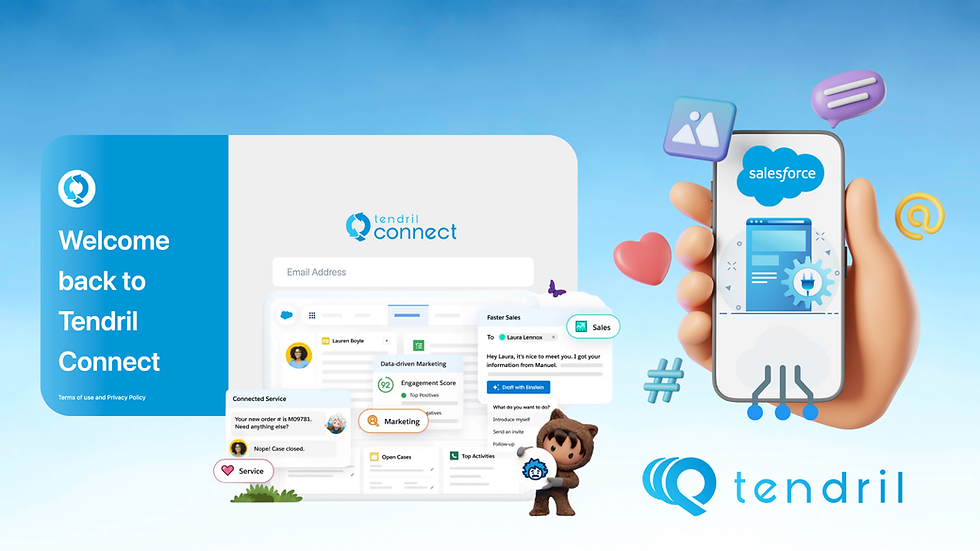
This is exactly why we built the Salesforce and Tendril Connect integration. Instead of having your reps manually dial numbers from a list or export CSVs, they can stay within the Salesforce ecosystem while Tendril does the heavy lifting of navigating phone trees and gatekeepers.
5. Prioritize the "Human" Element of Customer Relationship Management

It’s easy to get lost in the automation and the workflows, but at the end of the day, sales is about people. The reason we use CRM systems is to remember the small details that make a big difference.
Encourage your reps to use the "Notes" section for more than just "Left voicemail." They should be recording the prospect’s pain points, their specific objections, and even personal details like an upcoming vacation. When you follow up three weeks later and ask, "How was that trip to Italy?" you aren't just a salesperson; you're a partner. That is how you build a long-term relationship that leads to renewals and referrals.
6. Bridge the Gap: From Data to Conversations
You can have the cleanest Salesforce instance in the world, the most beautiful dashboards, and the most precise lead scoring. But if your reps aren't actually talking to people, none of it matters.
This is the "last mile" problem in sales. Most SDRs and AEs spend 80% of their time on the "grind"—dialing, listening to ringing tones, navigating IVRs, and talking to gatekeepers—and only 20% of their time actually talking to decision-makers.
To truly maximize sales with Salesforce CRM, you have to flip that ratio. You need a way to take those high-value Salesforce Reports and turn them into a stream of live conversations.
Make Salesforce Your Most Powerful Sales Weapon
Salesforce CRM is a beast of a tool. If you use it only as a database, you're paying for a Ferrari but driving it in a school zone. By focusing on clean data, automated routing, customized stages, and deep integration, you turn your CRM into a platform that actively helps your team win.
But remember, the CRM is the brain, and your sales reps are the heart. The goal is to get the brain and the heart working together without the friction of manual "busy work."
Are you ready to stop the manual grind and start actually talking to your Salesforce leads?
At Tendril, we specialize in sales acceleration that keeps your CRM at the center of everything. With Tendril Connect, our agent-assisted dialer, your reps no longer have to waste hours on unanswered calls or gatekeepers. Our Salesforce integration allows you to pull your Salesforce reports directly into our dialing engine.
The moment a decision-maker answers the phone, the call is transferred to your rep along with the relevant Salesforce record. Your reps spend their day doing what they do best: closing deals.
Explore Tendril Connect today and see how we can help you double your live conversations without adding a single person to your headcount.
FAQs
1. How does Salesforce CRM specifically help in improving sales?
Salesforce CRM improves sales by centralizing customer data, allowing for better lead tracking, more accurate forecasting, and automated workflows. It ensures that reps focus on the right leads at the right time, reducing the sales cycle length.
2. What are the main CRM benefits for small to mid-sized sales teams?
For smaller teams, the biggest benefits are organization and scalability. A CRM prevents leads from falling through the cracks, provides a professional structure for customer interactions, and allows leadership to see what is working without needing constant check-ins.
3. Can I integrate cold calling tools with Salesforce?
Yes. In fact, integrating a tool like Tendril Connect with Salesforce is one of the best ways to increase productivity. It allows you to use your Salesforce Reports as call lists and automatically logs every call outcome back into the CRM as a Task.
4. How do I improve sales productivity within the CRM?
Focus on reducing manual data entry. Use automation for routine tasks like sending follow-up emails or updating lead statuses. Also, ensure your data is verified via services like Tendril Enrich so reps don't waste time on bad contact information.
5. What is the difference between Tendril Connect and a standard auto-dialer?
A standard auto-dialer just dials numbers. Tendril Connect uses human agents to navigate gatekeepers and IVRs, only transferring the call to your rep when a live decision-maker is on the line. This ensures your reps are always "warm" and ready to talk.


Your article is simple, informative, and engaging. It’s a great resource for professionals exploring salesforce training in pune for better opportunities.